2025 marked the 10th anniversary of 040x040. What started as a quirky exploration between Hamburg and Malmö has evolved into a cross-cultural community of creators, innovators, and curious minds. Ten years later, we’re revisiting voices from the journey - and how their perspectives on creativity, collaboration, and city-making have shifted over time.
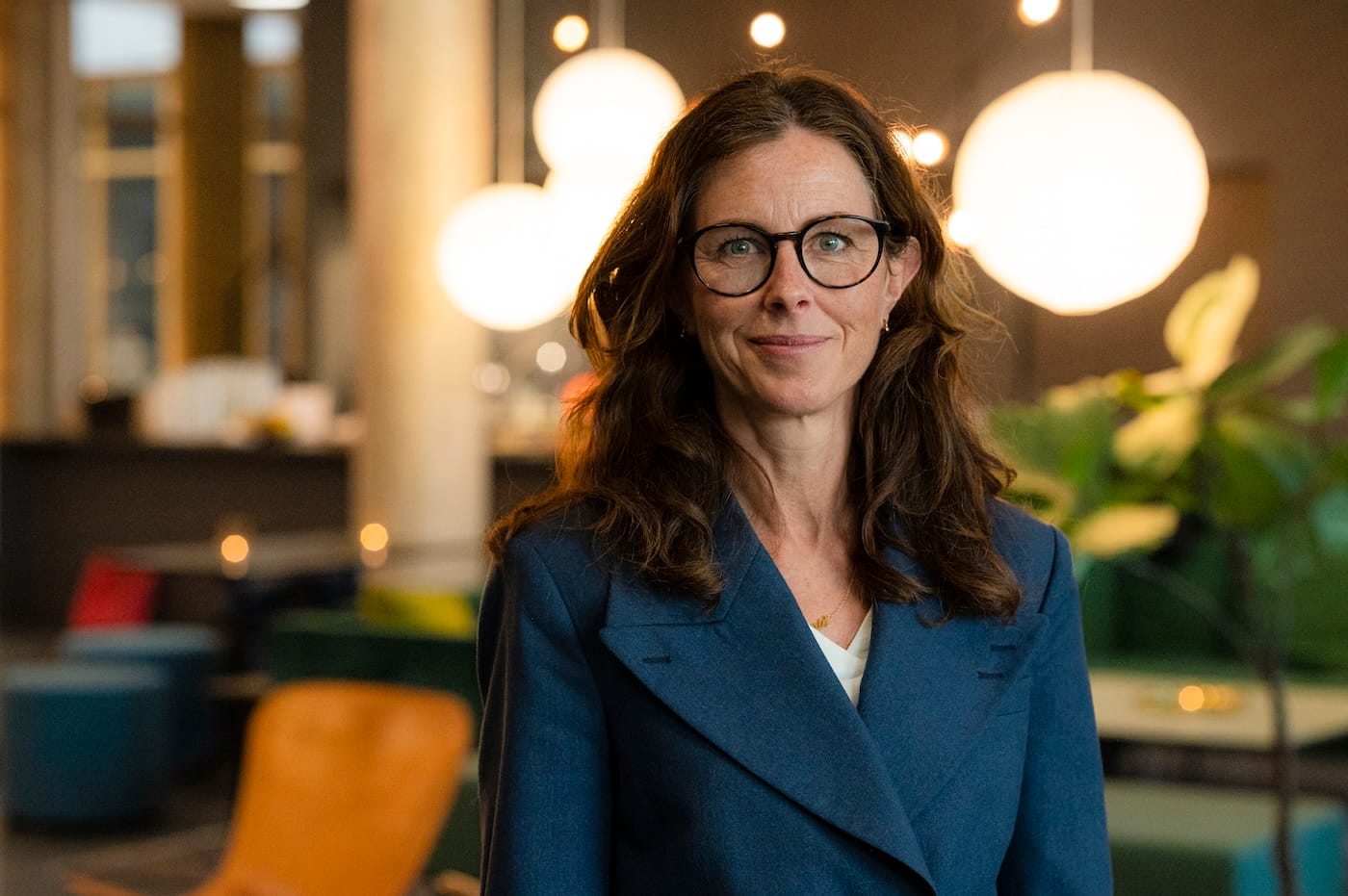
Yasemin Arhan Modéer is the CEO and founder of Altitude Meetings, a purpose-driven company focusing on finding solutions to climate challenges and social sustainability. Based in Malmö, she has been part of the 040x040 story since its very first edition in 2015. Yasemin is a profiled speaker and moderator, leading seminars on topics like sustainability, climate, entrepreneurship, and how business and research together can present ideas to solve our global challenges.
Matthias: Do you still remember your first 040x040? It was actually the very first one we did, 10 years ago. What stuck with you when you think back to that? Yasemin: Quite a few things, actually. First of all, it was really nice to explore Hamburg and see that there are a lot of connections there. And tying together the threads from that time – with my work now being very close to these big Spallation Source facilities, I think there might be an opening for working more closely together again between Hamburg and the south of Sweden, not just Malmö but also Lund. That's something I carry with me. And getting to know each other the way we did – despite some messy years during the pandemic – was really valuable. I think it would be worth doing more of that.
Lovely. That's great to hear. It's been a long journey from that first edition to now, ten years in. I'm curious: who were you back in 2015, professionally and personally? I had just started Altitude – we were barely a year old, if that. A lot has happened since. We've gone from a company that was, I think, quite value-driven even then, but still finding its way – to where we are today, which is very clear: it's all about democracy and climate. That's our reason to exist. We're still searching for the best tools to actually help with those things – our purpose is to be part of the solutions and create the circumstances where solutions can emerge. And that has become my personal driving force too. That's what I want to do, whether with Altitude or in some other role. That's become very clear over the last ten years.
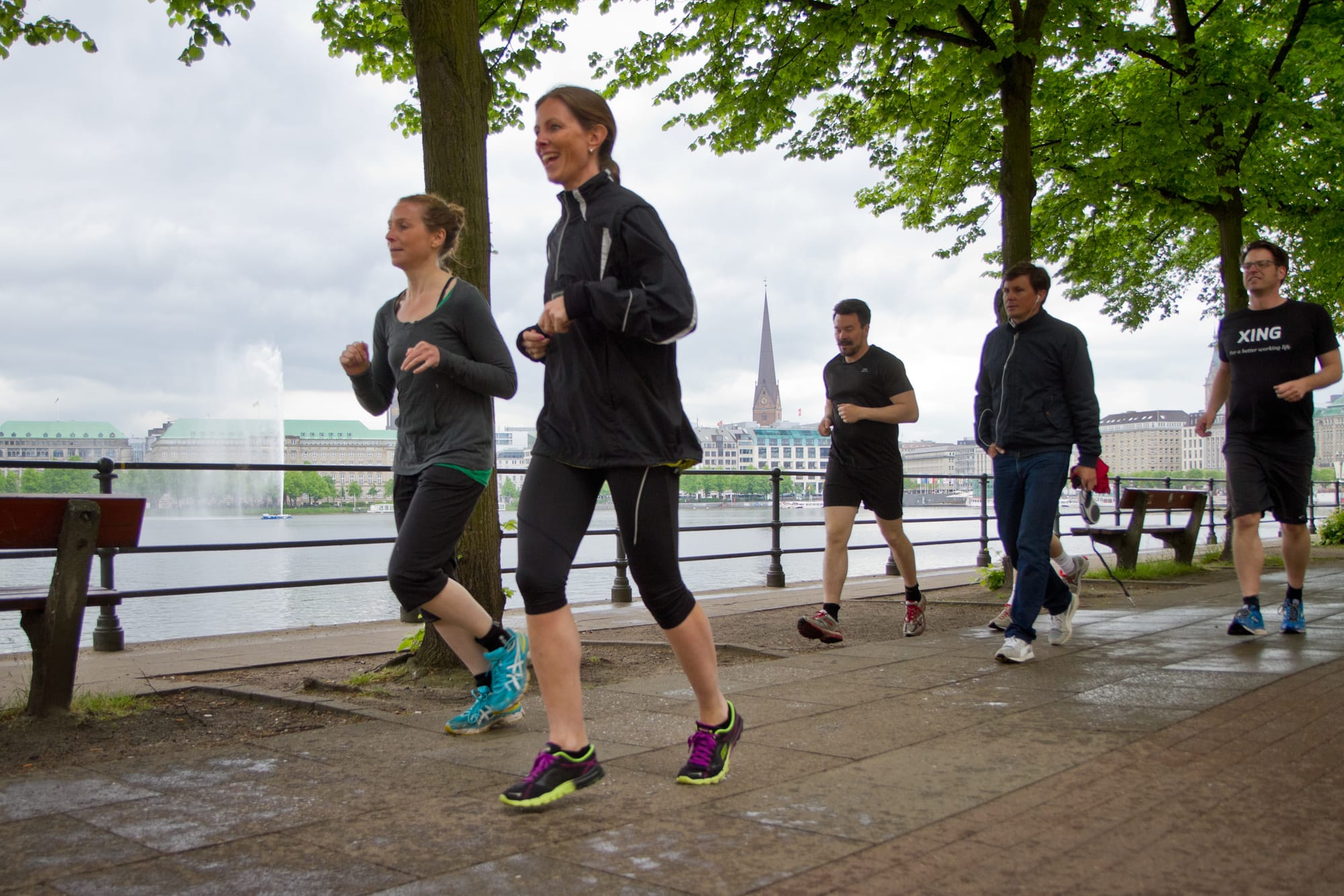
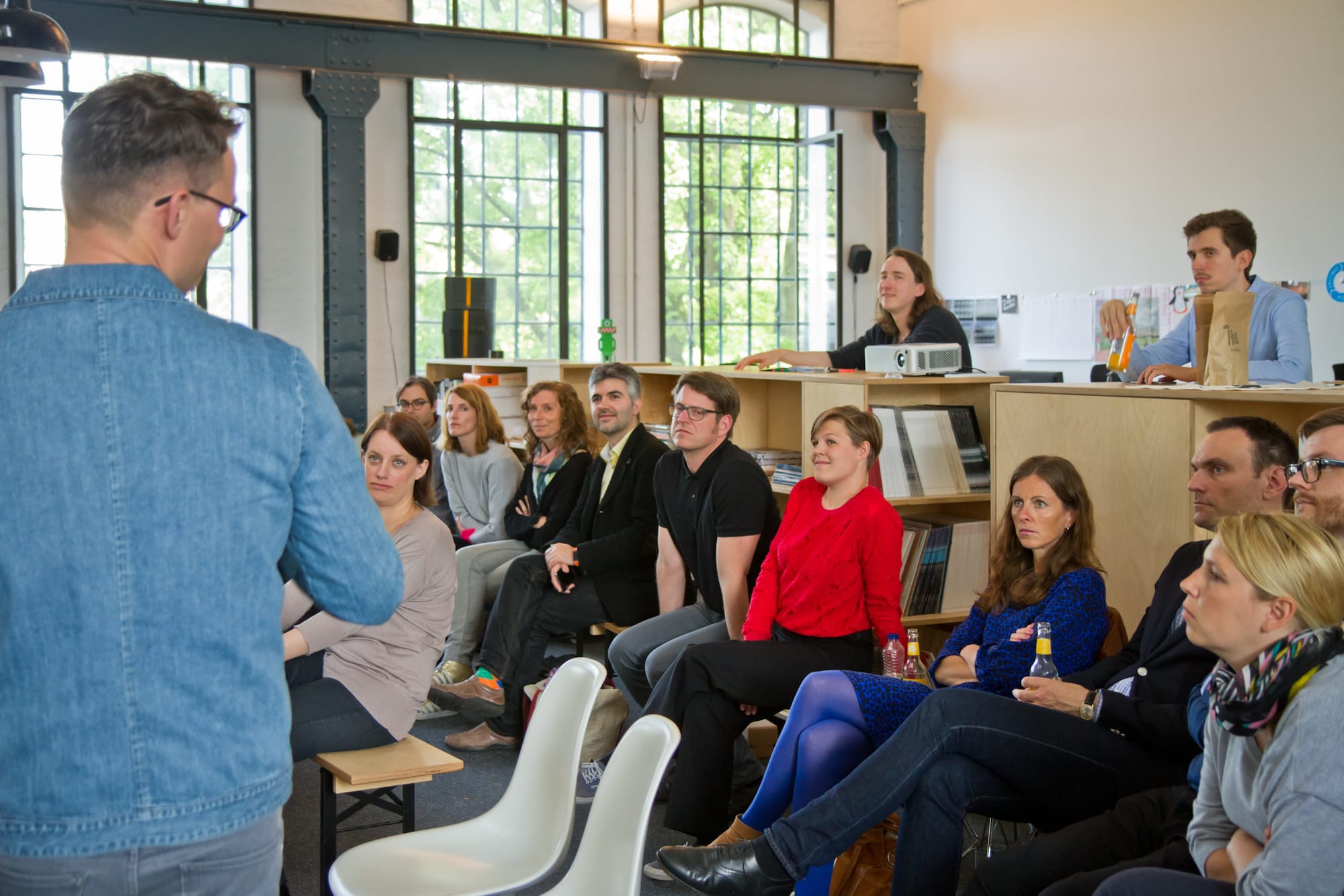
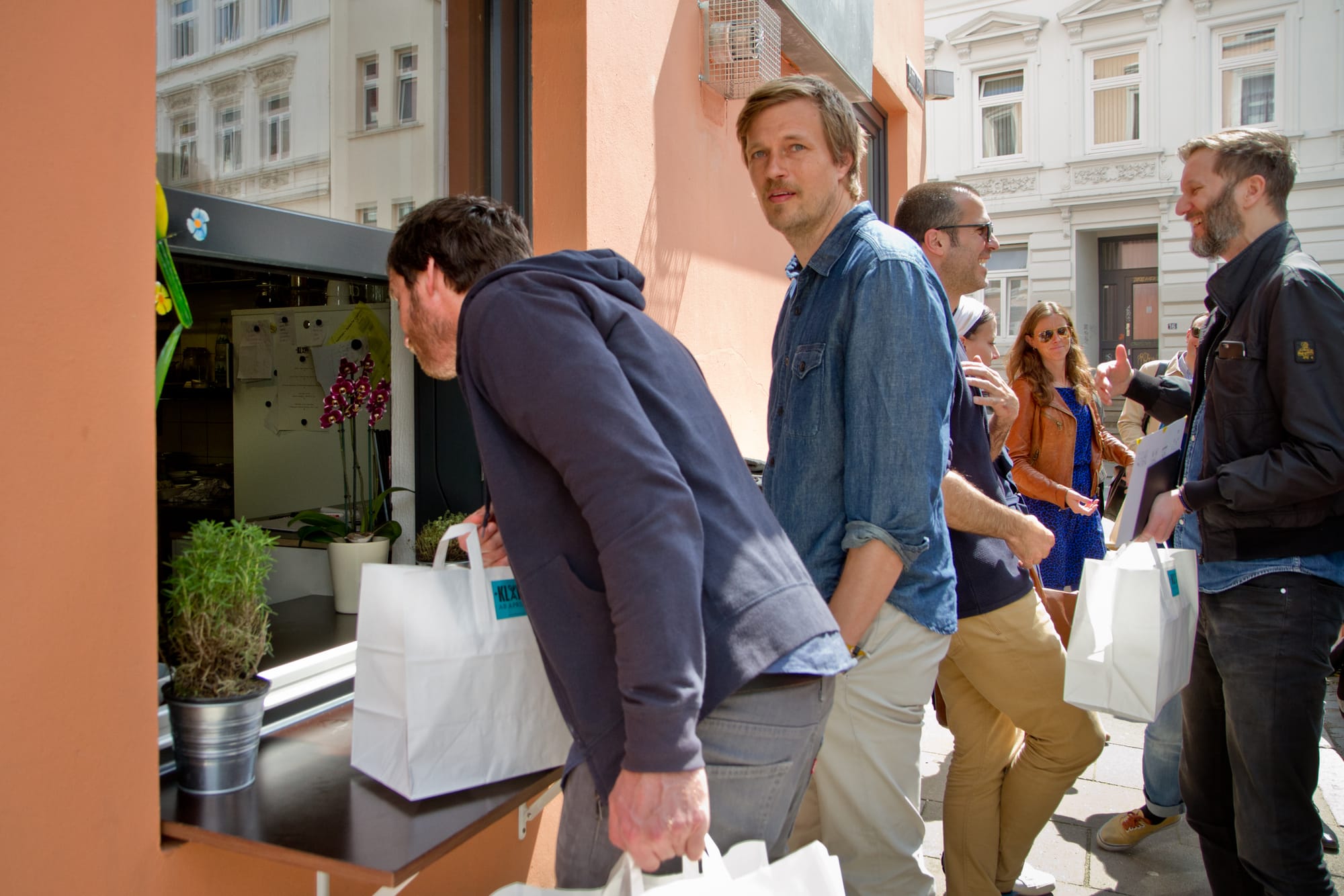
Yep, 040x040 includes activities such as running around the Alster lake and site visits.
So it's become more focused, more values-driven. What else has changed in your field over that time, in a nutshell? A lot of focus has gone into understanding the value we create. When you work on green transitions or bring democracy into business life, it's rarely clear to the CEO or company owner what they're actually getting – most people understand it's a good thing, but they can't put it in the budget because they don't see the return, only the investment. And that's a lesson we've learned – not just us, the whole sector trying to enable green or social transitions: you need to calculate the value in concrete terms, in money. What would it actually be worth in ten years to make this investment in becoming greener, or in taking democracy seriously as a business principle? We haven't cracked that fully, but we're pushing hard to be much more concrete in the value proposition.
You've talked a lot about the private sector struggling to grasp the value of this – democracy, sustainability. It almost sounds political. How political is the work you do with Altitude? We try to be non-political, because we think both of these issues are fundamental to survival – of a company, a society, a country. Without democracy, what are we fighting for? And if we're not taking climate seriously, there won't be much business to do anyway, because we'll be forced to prioritize things that leave no room for anything else. So it's a survival question, economically and beyond. What we're really talking about is changing business models. Over the last 30, 40, 50 years, the driving force for many companies has been maximizing shareholder returns. But that's not why most people started their companies – they started them to solve something. Today, students at university are taught that their only job is to raise expectations toward owners. That's just not how you build things that last. A hundred years ago, people built companies they wanted to pass down through generations. We need to get the private sector to understand that rethinking the business model isn't against success – it's the prerequisite for it. But politicians also need to set the right conditions. Carrot and stick. The whole EU system, the CSRD, all of it – is it better to push through regulation, or to create incentives that make the changes genuinely attractive as a business decision? That tension is real.
That’s fascinating and directly connects to a remote course I took on cooperatives at The New School with Professor Trebor Scholz. We focused on mutualism and worker-owned businesses designed to solve problems differently.
It's powerful how massive this can scale—like Mondragón in Spain, a genuine multinational cooperative built on democracy and reinvesting revenue. When I asked the professor why this successful model isn't more widely known, he explained it boils down to the battle between capitalism and socialism. Especially in the US, "cooperative" is immediately branded as socialism. I found that both fascinating and a bit depressing, and it strongly mirrors what you're describing. It's very much the same thing. If we just drop the labels and ask: what actually works? If I want to build a successful business, I need money coming in – no surprise. I need to make that money work. I need to do something valuable and find a niche. All the green solutions are essentially already there, because everyone will need them – the market is coming regardless. And if you build in decent working conditions, no child labor, people feeling good – it's not rocket science. Eventually that produces returns, whether you call it profit, reinvestment, or something else. It's just smart business. I don't care whether it's labeled socialist or capitalist. I just want to do good work.
Absolutely. Let's shift to creativity and the spirit of our times – you've been touching on it already. What's on your mind when you think about creativity and collaboration right now? We just had a discussion in my team about how much we use AI and which tools we rely on. And if you strip away the arguments for or against – what worries me most is that we're getting lazy. And that will affect our creativity. Creativity is what we need to solve the really big problems. Beyond "Gather to Solve" – bringing together different minds, experiences, cultures – you also need genuine creative capacity. In the 1960s, there was so much more imagination, a real ability to visualize the future, to picture a world at peace or a world where people are healthy. We've lost that. Nobody seems to be imagining a fundamentally different future anymore. We're just managing the present. And if we use AI to generate our ideas for us, I'm genuinely afraid we'll lose our own ability to think creatively.
I love "Gather to Solve" – and I hear the concern about losing creative muscle. How do you actually address that in your work? What are you doing differently? I look at a full box of Lego in front of me and feel the possibilities, but also the complexity. One concrete thing: we're planning a visitor center at our venue in Lund, to show what's happening in the research and innovation space around material science. But I don't want to display it in the usual "look what neutrons can do" way. I want it interpreted by art students – filling this beautiful traditional building with different perspectives, making it playful and hands-on, embedded in conferences on nanotechnology or whatever the topic is. We're trying to raise funding for that now, and to get people from museums and different disciplines involved, to see what happens when you mix those worlds. Maybe ongoing workshops around future visions, with high school students. It's in the making.
So you're doubling down on the human factor – bringing people together to collide creatively. That's the only way, honestly. And we have to actively protect it, because after COVID it's so easy for people to retreat into their home offices. There's a lot of talk about the "third place" – not your office, not your home, but the space you go to for inspiration and encounter. That's what we need more of.
What about the Hamburg-Malmö relationship? Looking back, what did you take from Hamburg? What surprised or inspired you? Maybe it's not quite a surprise, but – I liked it much more than I expected. And I think that's partly because it was so easy to navigate, and quite similar to Malmö in feel. That was the biggest revelation. The unfortunate part is that a lot of the connections I made there didn't develop further – but that was probably because I was right in the middle of starting Altitude and simply didn't have the bandwidth. Had I done something similar today, I think I would have cultivated those relationships much more deliberately. A lot of the visits were genuinely inspiring, and I can see now where they could have led. I'd really like to do it again.
Good news – we're doing it again, so stay tuned. And I'm always curious about the similarities and differences between Hamburg and Malmö. How do you see the two cities approaching creativity, space, transformation? It's been ten years, so I can only speak to how I perceive Malmö now versus then. I think some of the underdog energy has faded. The city has become more organized, more ambitious in a conventional sense – and honestly, I'm not sure I like that. There was something in the air back then that was much more exploratory, more willing to try things without a clear plan, and some of that is gone. What I'd like to see is Malmö embracing what's around it more – Lund is very different, but has things Malmö could really learn from. And the greater Copenhagen–Skåne region as a whole. Maybe all the good plans are actually being implemented right now – I hope so. But there's also something in Malmö that makes companies reluctant to grow. It's different from Lund, where you have deep innovation infrastructure and real scale. In Malmö you have a lot of interesting, creative companies – but they don't grow. They may not be the ones that end up making the bigger difference. That's something I'd genuinely like to understand better. Have you talked to Martin about this?
Not in this interview format yet – but it would be a fascinating conversation to have. I'd love to hear his perspective. He might push back on everything I just said – and I'd welcome that, because I'm not deep enough in the scene to be sure I'm right.
Final stretch. I want to ask for three recommendations – places, people, projects in your area that you'd want to show people from Hamburg. Malmö, Lund, Skåne, greater Copenhagen – whatever comes to mind. Three things. First: our venue in Lund. I think it's really valuable to understand what's happening around the big research facilities there. You have DESY in Hamburg…
Yes, exactly. …and ESS in Lund is actually a sister organization. ESS is owned by 13 European countries, and the question of how we actually leverage that for real exchange and collaboration is wide open. With the Fehmarn Belt connection coming, that becomes even more relevant. I'd be happy to help organize a visit. Second: the Media Evolution ecosystem and the Malmö Generate District initiative. A lot has happened there. And Tomas de Souza, who now leads Minc, the Malmö incubator, is genuinely shifting the focus toward needs-based innovation – not just "look at these cool companies," but asking what problems around climate and democracy we actually need to solve. That's something I've hoped to see for ten years. It's worth watching. Third – something completely different. Botildenborg. It's right in the middle of Malmö, a beautiful historic estate with a garden and meeting spaces. The perfect place to go when you need to breathe and think.
I'll take it. Last question: looking ahead, what would you hope for from a new edition of 040x040? A real, tangible cooperation between the regions. And I'd actually want to bring Lund into it – not just 040 as a concept, but the wider area. So much is possible: exchanges, business connections, shared projects. With a genuine starting point of trying to make this corner of Europe a hotspot for solving the problems we're facing. Malmö in the middle, Hamburg and Lund on either side. That's the combination I'm excited about.
Lovely. Anything else you want to say before we close? No – I'm just looking forward to picking up where we left off. Let's go.