
2025 marked the 10th anniversary of 040x040. What started as a quirky exploration between Hamburg and Malmö has evolved into a cross-cultural community of creators, innovators, and curious minds. Ten years later, we’re revisiting voices from the journey – and how their perspectives on creativity, collaboration, and city-making have shifted over time.
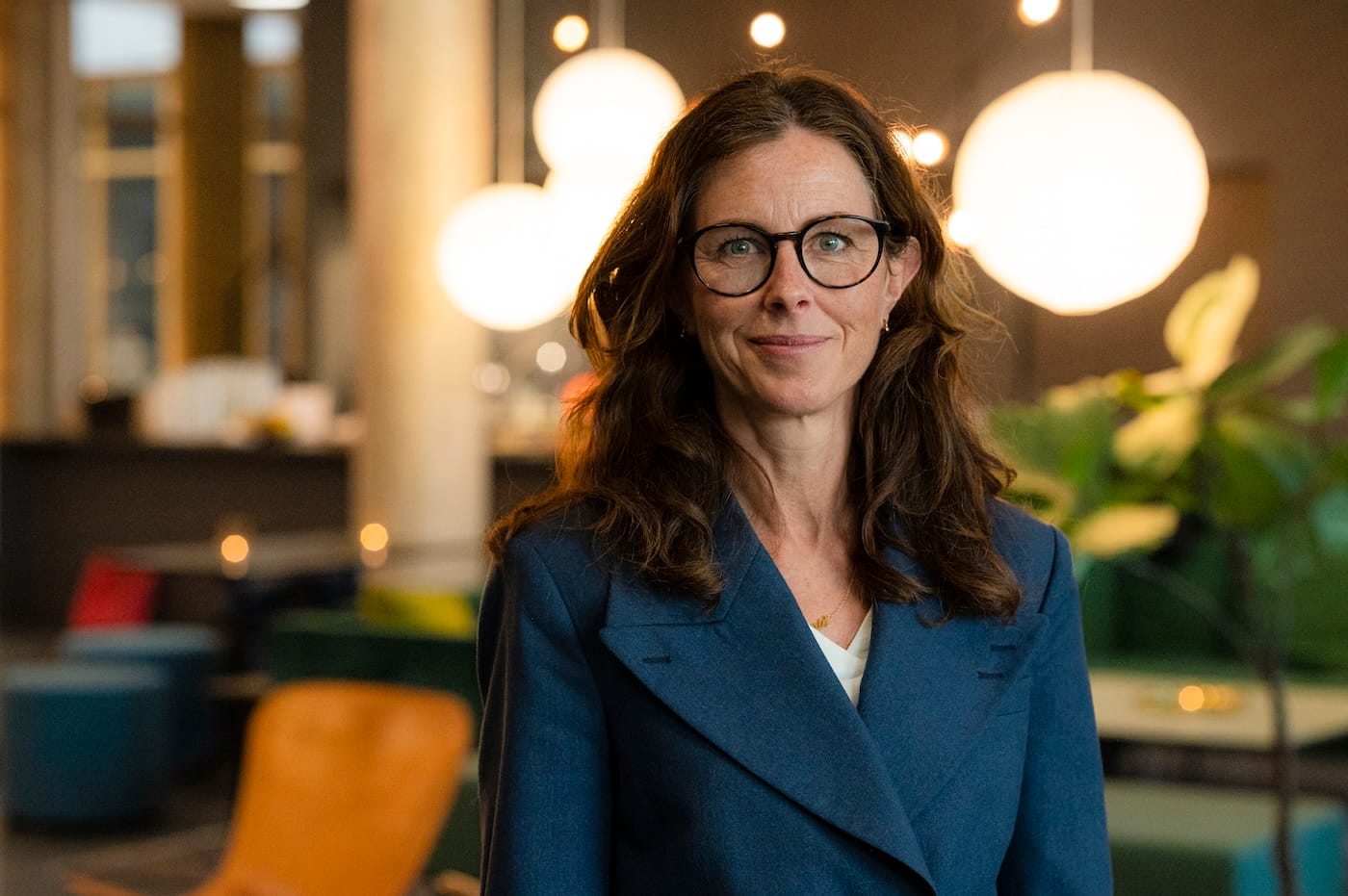
Jeanette Wester is a Malmö-based artist, scenographer, and architect working with site-specific spatial installations across public art, architecture, design, light, sound, and movement. Through her practice SPACE by Jeanette, she creates immersive environments that transform buildings, urban spaces, and in-between places into poetic experiences. Jeanette has been part of the 040x040 story since its early Hamburg–Malmö exchanges and continues to explore how art can create value, connection, and new perspectives in the spaces we share.
Matthias: Jeanette, it has been quite a while since 040x040. Do you still remember when you joined – and what has stayed with you from that time? Jeanette: I got a lot of new contacts, both in Germany and here in Malmö, people I probably would not have met otherwise. It deepened those relationships. And I got to know Hamburg in a way I would not have as a tourist. We met locals immediately, saw places I would not have found on my own, and exchanged ideas and thoughts in a more personal way.
What I remember most is that you felt safe with the people immediately. You knew someone had met them before, so there was trust from the beginning. That made it much easier to connect.
It has been around eight years since you joined the 040x040 community. Who were you back then, both professionally and personally? At that time I was just beginning to work more seriously with art installations. Since then, the installations have become bigger and bigger. I think it has evolved naturally. I am still the same person in many ways. I did some other things in between, but I came back to doing art installations.
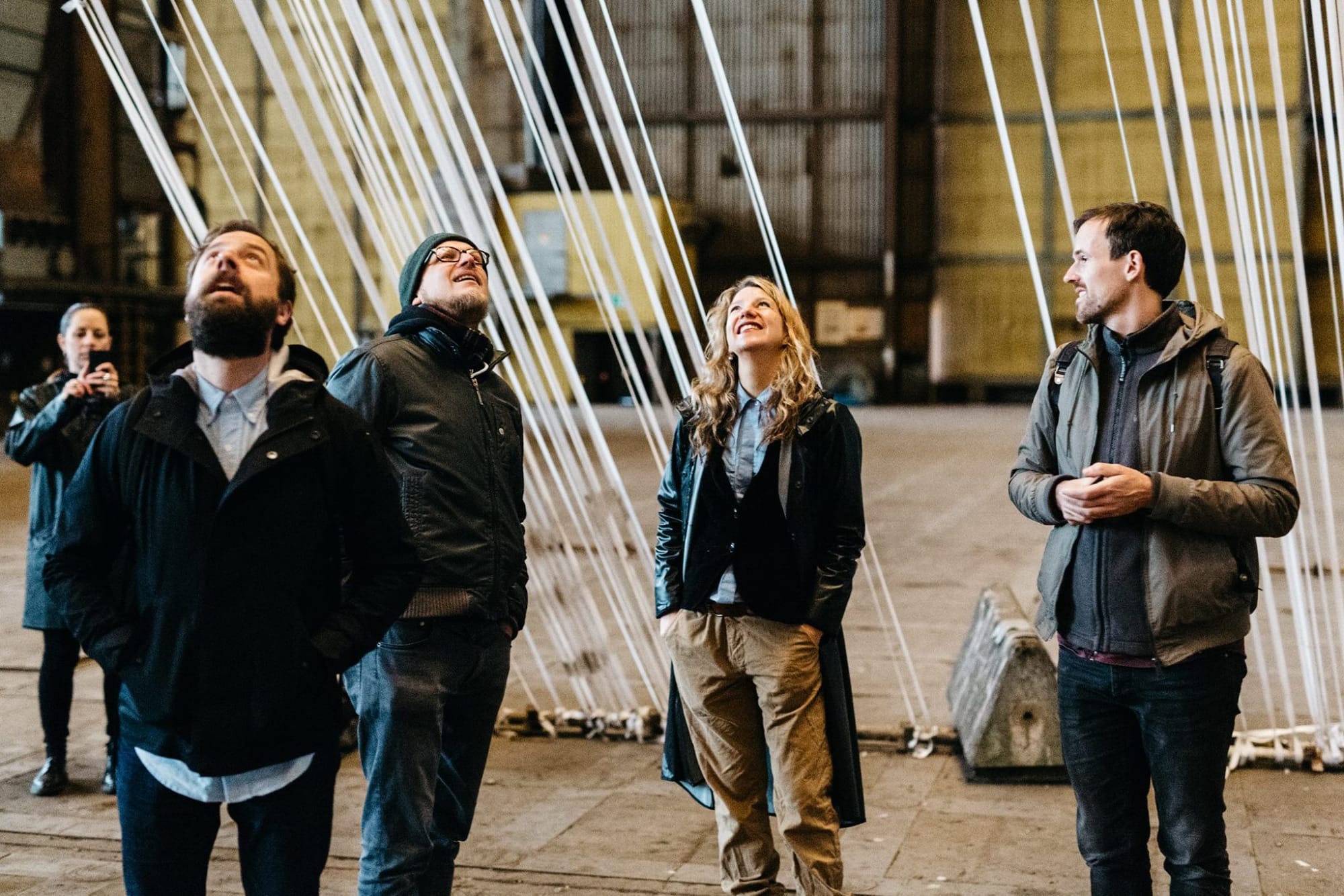
I remember when we visited Malmö during 040x040 and went to Varvsstaden and Nya Winklar. There was this impressive large-scale installation with strings. Is that still the kind of way you explore spaces? Yes, exactly. I work a lot with urban art. Now I also work with projections, especially with Underwater Dream, which I travel with around the world. I was just in Los Angeles and Japan with it, so the work has become more international.
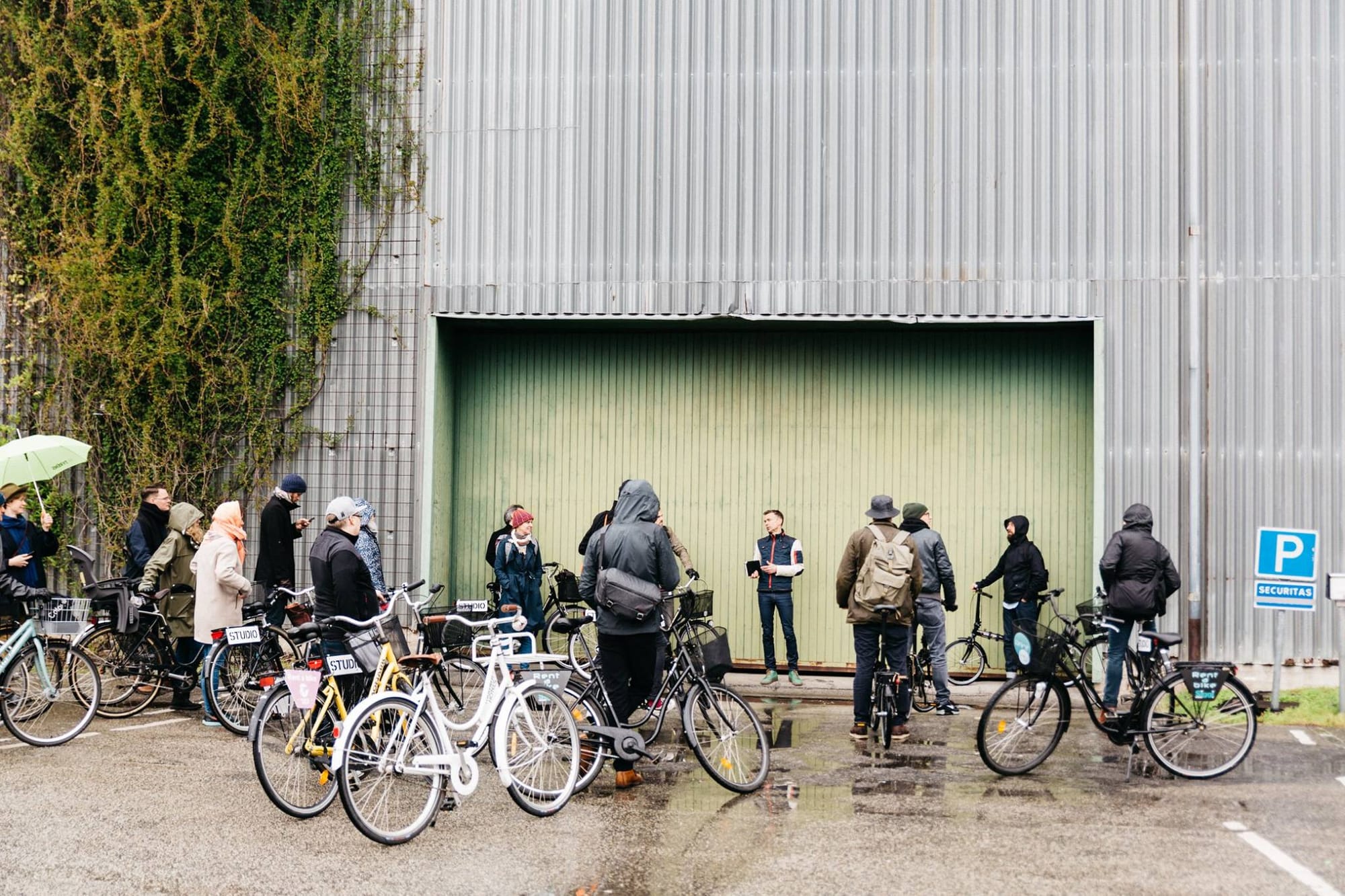
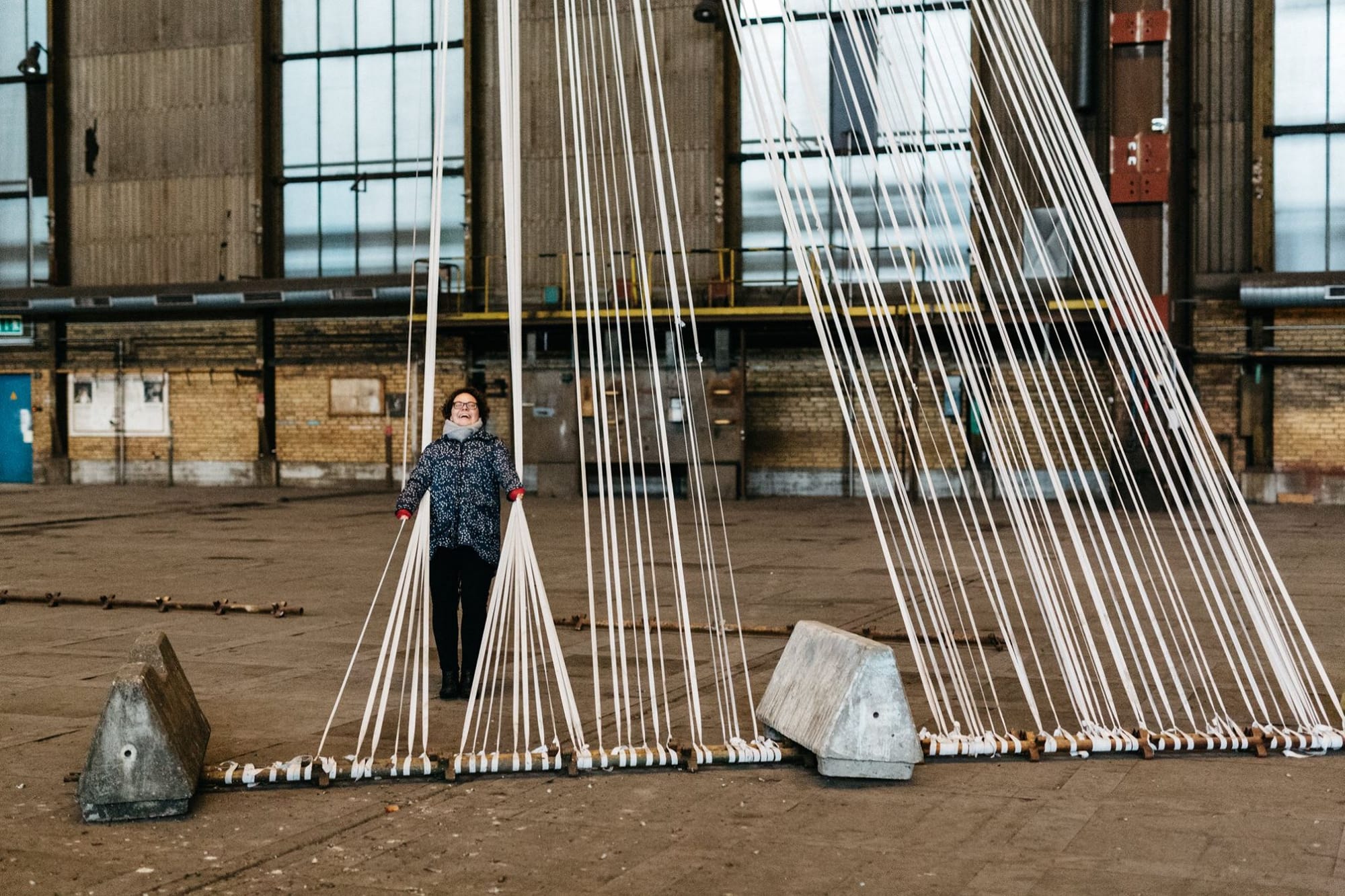
I am still curious about different sites and spaces, but I use different media now. Back then I used materials not normally used for spatial art – like strings or netting – to explore space. Now I also use video and audio. I started with paintings based on recordings of people underwater. I print them, paint on aluminium, and make collages from them. Right now, I am also starting to sell paintings.
What has changed in your work, and in how you look at creativity, since 040x040? I think there is no end to the spaces you can use. After that time, Corona happened. Spaces can be anywhere. I started indoors, then moved outdoors, and then began combining city planning with nature. There is no ending to what you can do with spatial art.
When you think about creativity and collaboration today, what is on your mind? Culture works either way, whatever climate we are in. It is about navigating within it. What has changed is the terminology and the way people look at my work. I think my work has become more accepted and valued by people, including property owners, landowners, and the city.
Ten or 15 years ago, I always had to explain that my work was not only something nice. It could create value. Now I do not have to talk about that as much, because people understand it themselves. They understand the value of having art on site. It gives them a profile. It says: we are innovative. They do not have to say it – people feel it through the spatial art.
Do you think that is because people understand your work better now, or because there has been a broader cultural shift? I think it is parallel. It takes a shorter time for me to be heard now. And the audience has shifted. Before, it was more often passionate people who invited me in. Now more economically driven people are interested, because they understand the value. They see that this actually creates an event, an experience, a profile.
I think people are saying: if we do not have this, then the place is empty. We just have walls, or we just have a square. Now they think: we need something on top of it.
During crises, I find new ways. Terminology and people can shift, but I kind of do the same thing. I ask: what is the site? What does the site need? What can we do here?
What role does technology play in your work? I love it. Apps and computers make so much easier now. Technology also lets us claim areas that used to belong only to certain groups. If a field was once mostly controlled by male technicians, I can use that knowledge and turn it into something that reflects how I think it should be.
Someone will always say: this is the right way. But it depends on what you want to express. The more tools I get, the more I can express what I think is important in this world. This is my poetry. I do not have a white canvas. My white canvas is the site, the space. That is also my black ink.
Let’s zoom in on the relationship between Hamburg and Malmö. When you think back, what did you take from Hamburg? What surprised or inspired you? I think we were very similar. It was nice that Hamburg was flat, but much bigger. You were also transforming old harbour areas into new areas. In that sense, we were in similar development phases. Hamburg has a different background, and the whole shipping area is much bigger than in Malmö. It felt like a bigger, stronger version of something familiar.
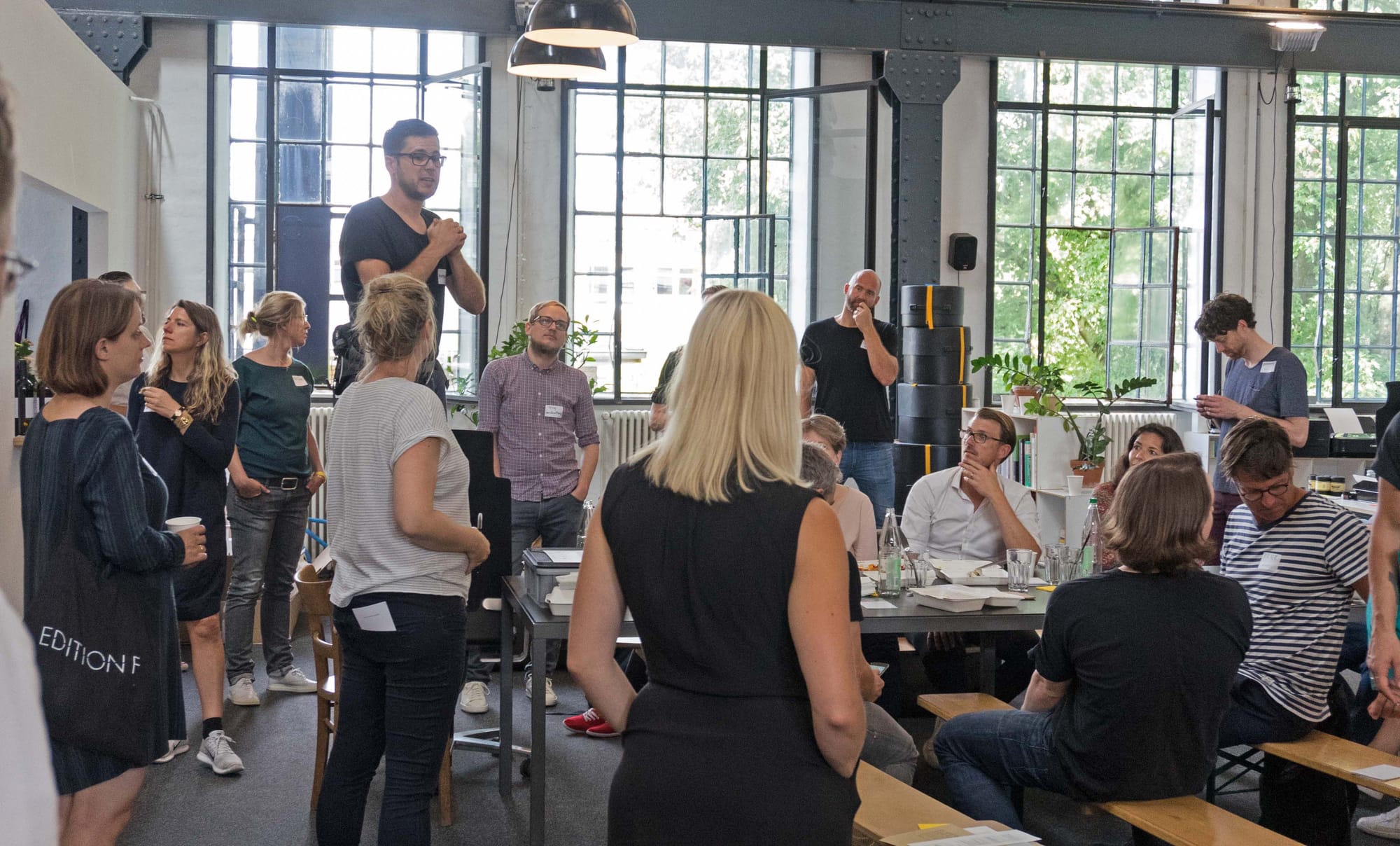
In your field of public art and site-based art, do you see differences in how Hamburg and Malmö approach creativity, space, or change? The group of people I got to know through 040x040 was more connected to computer technology and the city, not so much to the art scene. But I felt it was harder to get through with my art in Hamburg. We tried a couple of times. People from 040x040 gave me contacts and said: you should reach out to these people. But it didn’t happen, apparently.
At the same time, people who came from 040x040 to Malmö did bring me into projects here. Jenny Kornmacher, for example, took me into a couple of projects in Malmö. And someone who had worked for the city came to see my performance at Turning Torso. So people were curious.
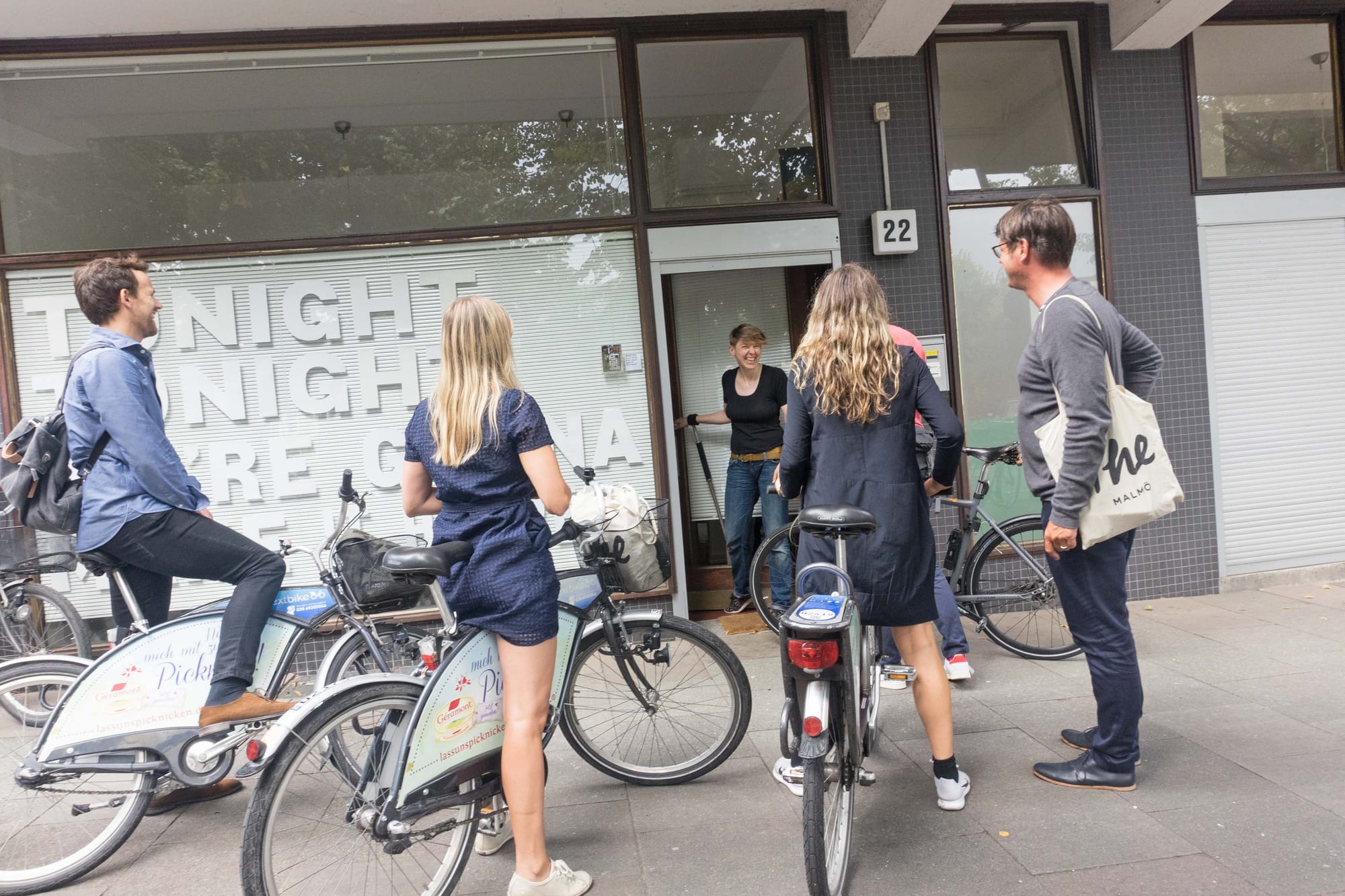
Why do you think that happened? I do not know, actually. I was surprised, because I think the willingness was there. Maybe it was a question of timing, or of not reaching the right people at the right moment.
A few years ago, I also tried approaching companies and institutions in Hamburg directly. Some people were interested, but it was not always easy to translate the idea into a concrete project. Sometimes it was about ownership, sometimes about process, sometimes maybe about language. So I still feel there is potential, but it needs the right context and the right way in.
Thinking of future 040x040 participants coming from Hamburg to Malmö or the region: what are three recommendations – places, people, or projects – they should not miss? You should definitely see SLVRBRGS. It is run by two guys, David and Anders. David was Malmö’s design guy and had one of the best design stores in Malmö. Anders started Minc. Together they opened a design, local art, and design store near Lilla Torg. It is very high level.
Because Anders comes more from art and David from design, they have really good things. They take in local work, but I think also things from other places. They also have a café and were the first in Malmö to get an alcohol permit without selling food, after a new law in Sweden.
The second thing is sauna. If you have not been to a sauna in Malmö, you should do that. There used to be a place you could reach by boat, but I do not think it is open anymore. The person who ran it now has a really nice sauna wagon called Bastu Paus. You should contact him. He can set it up anywhere in Malmö, and then you can swim in the sea. He is super nice and creates a really good experience.
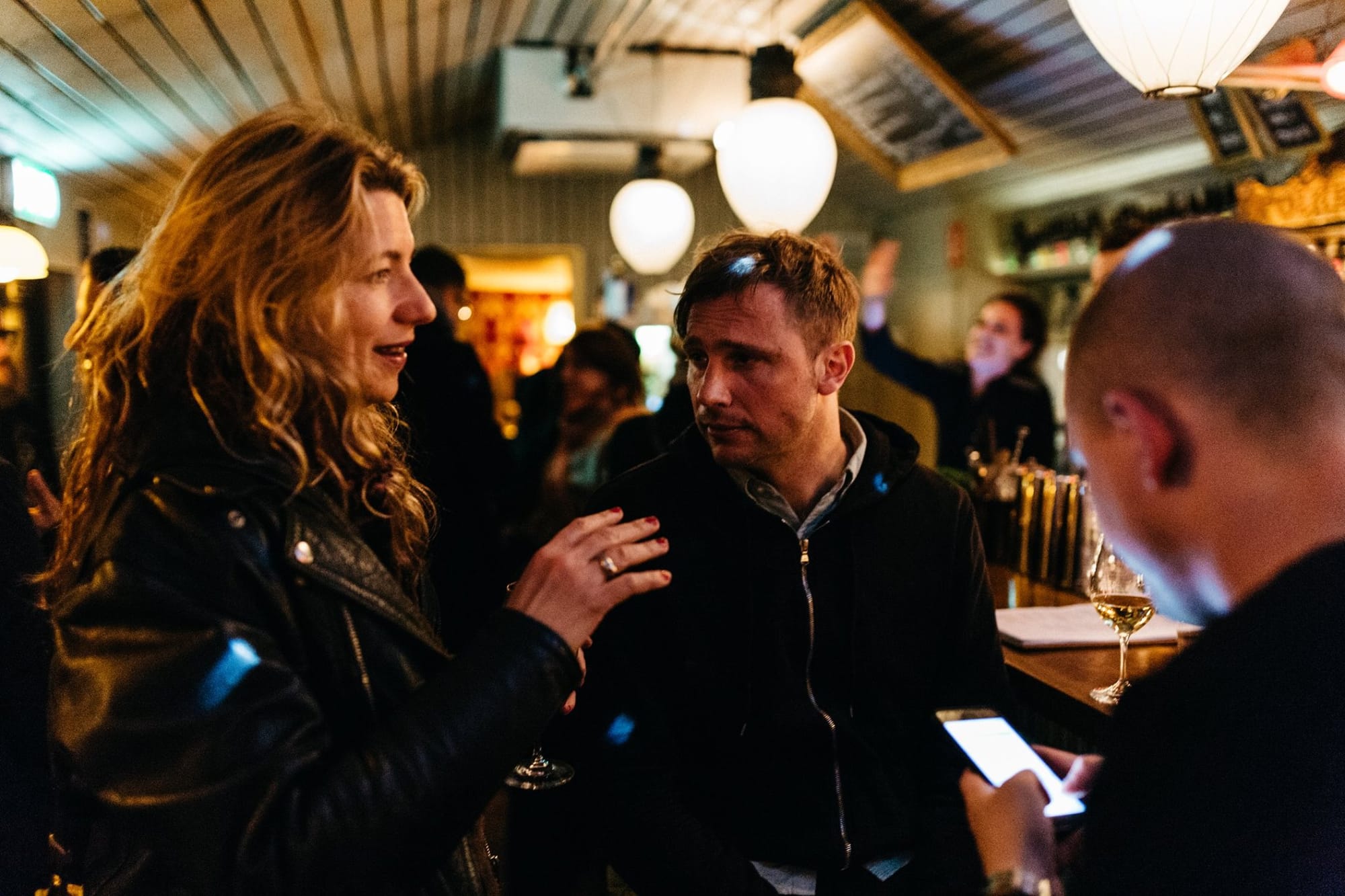
The third is the area around Möllevången, Folkets Park, and Nobelvägen. That whole place has been blooming with wine bars, food, and vivid new places in just a couple of years. Around Sankt Knuts torg and nearby streets, places have opened or changed. There is Freden, Flax, and Taco Palatset, which just opened with very good tacos in a beautiful old Malmö building. The whole area is full of wine bars, food, and energy. Bonus is Beachgarden Vaganza hat has a big variety of music in Västra Hamnen.
Looking ahead, what would you hope for from a new edition of 040x040? More cooperation. We should do more work in Hamburg. If I do Nya Winklar here, it could become urban art connecting the bands between Hamburg and Malmö. Literally, the art could exist in both places.
I have talked to people who said they do a lot of work with Bavaria, but not so much with Hamburg. Maybe Bavaria feels more exotic. Maybe Malmö does not feel exotic enough to Hamburg, while Bavaria feels that Malmö is more exotic. I do not know, but it is interesting.
Anything else you would like to recommend or share with regard to 040x040? I think it is nice that you take it up again. I think you should just continue the way you have done.
Thank you, Jeanette!